
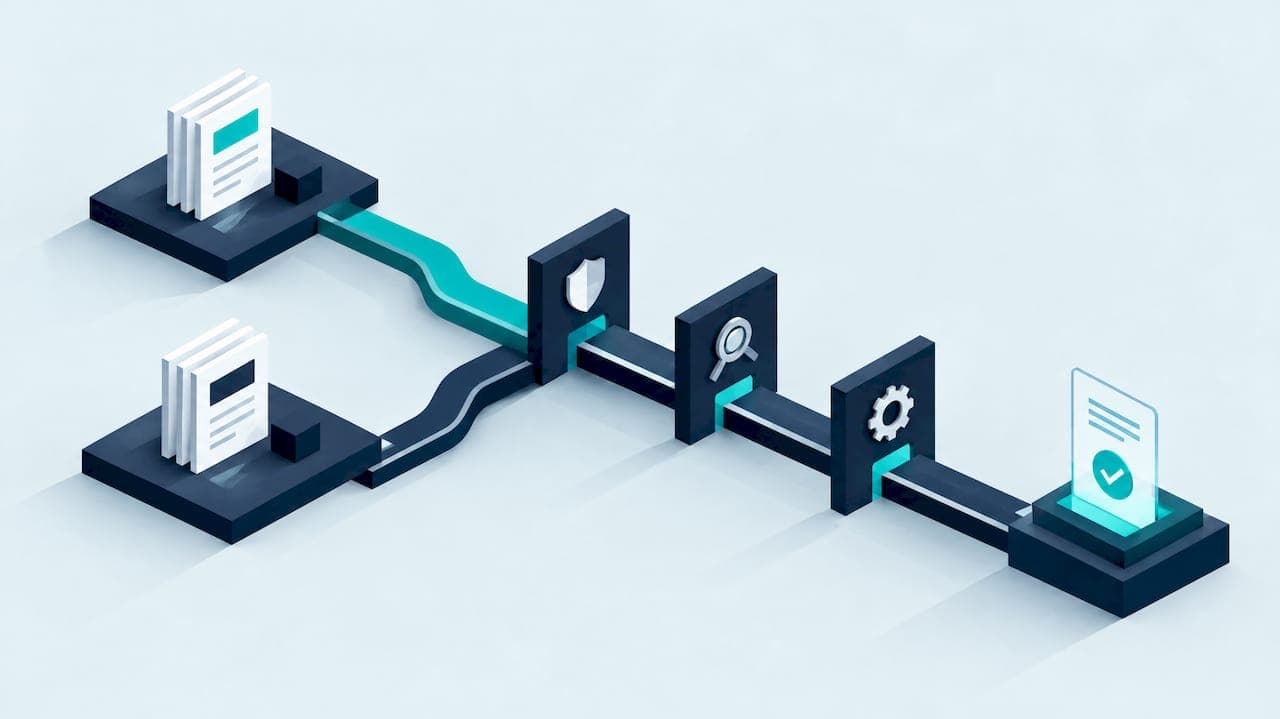
Proofpoint tends to suit enterprise buyers who want deep threat investigation and granular policy control, while Mimecast tends to suit buyers who want detection bundled with continuity and archiving under one gateway. Neither vendor publishes a reliable per-mailbox price, so the next step is the same regardless of preference: request quotes scoped to your exact mailbox count, deployment mode and included modules.
Key Takeaways
Proofpoint offers deep threat investigation and granular controls suited for security teams, while Mimecast provides bundled detection, continuity, and archiving favored by organizations with simpler needs.
| Point | Details |
|---|---|
| Match Proofpoint to security teams | Proofpoint is ideal for teams wanting a unified investigation console and the ability to manage alerts manually. |
| Match Mimecast to operational needs | Mimecast is suitable for organizations that prefer bundled detection, continuity, and archiving under fewer vendor relationships. |
| Request detailed vendor quotes | Obtain quotes for your specific mailbox count and deployment mode, as published prices are not publicly available. |
| Complete SPF, DKIM, and DMARC setup early | Implement email authentication standards during procurement to reduce spoofing risks. |
| Use Solusec for validation | Solusec offers independent testing and certification services to support your email security deployment. |
Table of Contents
- Quick takeaways for IT buyers
- Proofpoint, Mimecast and Trustifi compared
- Gateway versus API: what the choice actually costs you
- Getting comparable quotes from vendors
- A decision checklist and demo questions that prove claims
- What a proof-of-concept should actually test
- How we support your email security rollout
- FAQ
- Sources
Quick takeaways for IT buyers
Before a single demo call, a few facts shape the whole shortlist. Proofpoint's strength sits in its threat-investigation workbench and granular controls, which suits security teams running their own triage. Mimecast's strength sits in bundling continuity and archiving with gateway-based filtering, which suits buyers who want fewer moving parts. Mimecast's current G-Cloud listing confirms business email compromise protection is included across its plan tiers, with continuity and archive reserved for higher tiers.
- Match Proofpoint to teams that want a unified investigation console and can run their own alert triage.
- Match Mimecast to teams that want continuity and archiving bundled rather than procured separately.
- Request quotes for identical mailbox counts and deployment modes from every vendor you shortlist, since published pricing is not available from either vendor.
- Treat SPF, DKIM and DMARC as groundwork to complete during procurement, not after: the NCSC recommends progressing towards a DMARC "reject" policy to cut spoofing risk.
Proofpoint, Mimecast and Trustifi compared
Three names dominate most shortlists for this category: Proofpoint, Mimecast and Trustifi. Each takes a different route to the same job, protecting mail flow, and the differences matter more at implementation time than they do on a feature sheet.
| Dimension | Proofpoint | Mimecast | Trustifi |
|---|---|---|---|
| Deployment model | Gateway or Microsoft Graph API | Gateway (MX) or API | Gateway or API, per vendor roundups |
| BEC protection / impersonation defence | Workbench-led investigation and policy controls | Included across plan tiers | Listed as a core feature in comparisons |
| Sandboxing / attachment analysis | Included in core protection tooling | Available, tier-dependent | Referenced in vendor roundups |
| Continuity & archiving | Available as separate modules | Bundled on higher tiers only | Not consistently detailed in public sources |
| Pricing model | Quote-based, no public rate card | Quote-based, no public rate card | Quote-based, per market listings |
| Typical buyer fit | Unified threat investigation, granular policy control | Bundled continuity, archiving and gateway controls | Buyers comparing alternatives to the two market leaders |
Proofpoint documents both gateway and Microsoft Graph API deployment options, alongside investigation tooling it markets as rapid to activate. Any vendor-stated detection percentage should be treated as a marketing claim until it is reproduced in your own proof of concept. During a trial, validate the Threat Protection Workbench against real investigation workflows rather than a vendor-run demo script.
Mimecast's packaging keeps BEC protection available on every tier, but continuity and archive sit behind the Advanced and Premium plan families, according to its G-Cloud service listing. If continuity matters to your organisation, confirm which tier includes it before comparing headline prices across vendors. PeerSpot's comparison of the two platforms frames the choice around exactly this trade-off: a bundled continuity and archive package versus a unified investigation workbench.
Trustifi surfaces repeatedly in market roundups as a third option worth including on a longlist, particularly for buyers who want to see how the two larger vendors price against a smaller entrant. It is worth a comparison quote alongside Proofpoint and Mimecast rather than a standalone evaluation.
- Peer reviews on Gartner Peer Insights and PeerSpot show both Proofpoint and Mimecast with strong ratings, with reviewers crediting Proofpoint's granular controls and Mimecast's continuity and archiving strengths.
- Use peer review commentary to shape your proof-of-concept scope, not to replace it: ratings reflect other buyers' environments, not yours.
Gateway versus API: what the choice actually costs you
The deployment decision drives most of the implementation effort and risk, so it is worth separating into its practical parts.
- Gateway deployment routes mail through the vendor before Microsoft 365, which gives full mail-flow control and supports continuity during an outage, but it requires an MX record change, a cutover window and a rollback plan if filtering misbehaves.
- API deployment connects directly to the mailbox platform, which typically reaches production faster and avoids a hard cutover, though it depends on the mailbox platform staying available and may offer less native continuity.
- Detection approach varies by vendor: behavioural analysis catches novel impersonation patterns, rules and intelligence feeds catch known indicators quickly, and sandboxing catches malicious attachments that evade signature checks; most platforms blend all three to different degrees.
- Operational load shows up in the admin console: alert fatigue, investigation workflow design and SIEM or SOAR integration determine how much analyst time a platform consumes after go-live, regardless of its detection claims.
Getting comparable quotes from vendors
Vendors price on mailbox count, deployment mode and module selection, not a published rate card, which makes like-for-like quotes essential.
- State your exact mailbox count, deployment mode (gateway or API) and required retention period in every request.
- Ask explicitly whether continuity, archiving and DLP are included or priced as add-ons.
- Request a written SLA with uptime commitments, not a verbal assurance from a sales call.
- Ask how pricing scales at renewal and when headcount grows, since per-mailbox economics can shift materially at that point.
Pro Tip: Ask each vendor to confirm any publicly cited per-user figure in writing against your own mailbox count before you compare totals.
A decision checklist and demo questions that prove claims
Score your organisation against four factors before you pick a finalist: exposure to high-value payment fraud, how much continuity matters if mail goes down, compliance or archive retention duties, and how much ongoing triage your own team can absorb. For context on the scale of the underlying risk, 43% of UK businesses reported a breach or attack in the most recent survey year, which is worth weighing against your own exposure.
- Ask for a live detonation of a sample malicious attachment, not a slide describing the sandbox.
- Ask for an on-click URL analysis demonstration using a realistic phishing link.
- Ask for a continuity failover test so you see what happens to mail flow mid-outage.
- Ask how the platform handles false positives and what the escalation path looks like.
- Confirm domain authentication is in place or planned: NCSC guidance treats SPF, DKIM and DMARC as prerequisite work, not optional extras.
Understanding how business email compromise attacks typically unfold will sharpen the questions you ask in a demo, since most vendor claims are pitched against generic phishing rather than targeted BEC.
What a proof-of-concept should actually test
A proof of concept should include simulated BEC messages, attachment detonation, on-click URL analysis, a continuity failover check and an archive retrieval test, run against your own mail traffic rather than vendor-supplied samples. Measure two figures throughout: false positives per 10,000 messages and mean time to investigate a flagged email. These acceptance tests and validation checks are typically scoped as part of penetration testing and certification engagements.

Pro Tip: Keep a structured record of every acceptance test result and decision during the POC. A tool like The Intent Ledger can help teams turn scattered meeting notes and vendor calls into a traceable decision log, which matters if procurement decisions get challenged later.
How we support your email security rollout
Whichever platform you choose, the deployment still needs independent validation and a baseline compliance check. Our penetration testing services test mail flow and supporting infrastructure for exploitable gaps, and our Cyber Essentials certification work gives you a recognised baseline to show auditors, insurers and customers once your chosen platform is live.

If you need a fixed-price starting point, Solusec's external IP test and Cyber Essentials certification pricing details are available on their website. Get in touch to scope a validation test around your mail security rollout.
FAQ
Who is Proofpoint's biggest competitor?
Mimecast is the most frequently cited alternative to Proofpoint in peer-review comparisons and market roundups. Gartner Peer Insights and PeerSpot both position the two as the primary comparison pair in the email security category.
Does the government use Proofpoint?
Public sources in our research did not confirm specific government deployments of Proofpoint, so we cannot state this as fact. UK public sector buyers should check current supplier frameworks such as G-Cloud directly for confirmed deployments.
What are the top 5 email security solutions?
Market roundups consistently feature Proofpoint and Mimecast as the two leading platforms, with Trustifi appearing as a smaller, alternative entrant in comparison posts. A definitive ranked list of five was not supported by the sources we reviewed, so treat any such ranking with caution and verify it against current peer-review platforms.
Who are Mimecast's main competitors?
Proofpoint is Mimecast's most commonly cited competitor, based on how frequently the two appear together in peer-review comparisons. Trustifi also appears in market roundups as a smaller alternative worth including on a longlist.
Is Mimecast better than Proofpoint?
Neither platform is categorically better: Mimecast tends to suit buyers who want continuity and archiving bundled with gateway filtering, while Proofpoint tends to suit buyers who want a unified threat-investigation workbench. The right choice depends on your deployment preference, continuity requirements and how much in-house triage capacity you have.
Sources
- Email security and anti‑spoofing — NCSC
- Mimecast, Proofpoint or Abnormal AI for business email compromise — CompareTheCloud
- Mimecast — G‑Cloud service listing
- Mimecast vs Proofpoint — PeerSpot
Recommended
- From £2,500: 2026 UK penetration testing costs and checklist
- How Much Does a Penetration Test Cost? UK Prices 2026
- Penetration Testing for Cyber Insurance
This article was created with assistance of AI. We never use AI with your data unless given explicit permission.